Picture this: you’re planning your vacation in Puerto Vallarta, scrolling through whale watching tours, and every option seems to promise the same thing. Beautiful whales, amazing views, and an unforgettable day on the ocean.
But when you look closer, the experiences can be surprisingly different.
Some boats carry large groups. Others welcome just a handful of guests. Some focus on entertainment, while others give you time to learn about the whales, listen to their songs, and appreciate what’s happening around you.
So, how do you choose?
If you’re considering whale watching tours in Puerto Vallarta, this guide will help you understand what really matters before booking, from choosing the right boat to recognizing a responsible operator.
Because seeing a whale is wonderful. Understanding the experience makes it even better.
Why Puerto Vallarta Is Special for Whale Watchinga

Every winter, something remarkable happens in Banderas Bay.
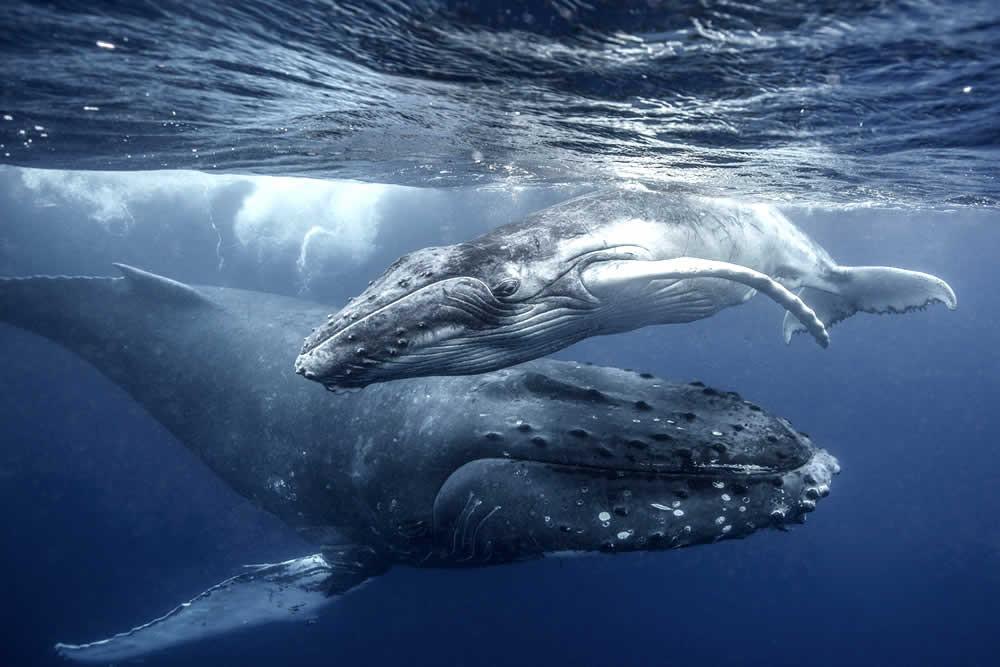
Humpback whales travel south from their northern feeding grounds to the warmer waters of Mexico’s Pacific coast. Here, they gather to mate, give birth, and care for their calves.
For visitors, this creates an opportunity to observe these animals in their natural environment.
You might see a whale lifting its tail before diving, a mother swimming alongside her calf, or a powerful breach that sends water flying into the air.
And sometimes, the most memorable moment is simply watching a whale surface quietly beside the horizon.
Unlike visiting an aquarium, nothing here follows a schedule. The whales decide what happens, and that’s part of the experience.
When Is the Best Time to Go Whale Watching in Puerto Vallarta?
The whale watching season generally runs from December through March, with January and February often considered particularly good months for sightings.
The exact dates for authorized whale watching activities are established by Mexican environmental authorities each season.
What to expect throughout the season
1.- December: The season begins, with humpback whales arriving in the bay.
2.- January: An excellent time to observe whale activity, including courtship behaviors.
3.- February: Another popular month, with opportunities to observe mothers and calves.
4.- March: Whale activity continues as the season gradually comes to an end.
Keep in mind that sightings depend on nature, weather, and sea conditions.
No responsible operator can promise a breach, a particular number of whales, or a specific encounter.
And that’s exactly how wildlife watching should work.
Small Boat or Large Boat: Which Experience Is Better?
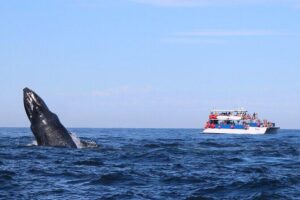
This is probably one of the most important decisions you’ll make.
The size and style of your boat can completely change how your day feels.
Large-group whale watching tours
Larger vessels may offer spacious decks, more seating, and additional onboard facilities.
They’re often a good choice for travelers who prefer a bigger boat or are visiting with a large group.
However, the experience can feel less personal, particularly when many passengers are trying to photograph the same whale.
Small-group whale watching tours
Smaller boats offer a different atmosphere.
With fewer people onboard, it’s often easier to hear your guide, ask questions, and move between viewing positions when it’s safe.
There’s also something special about sharing a quiet moment on the ocean with a small group.
At AdaSailing, we prefer this more personal approach.
Our whale watching experiences aboard Bruna, our 29-foot speedboat, welcome a maximum of 12 guests, allowing us to focus on the wildlife and the people enjoying it.
Of course, smaller boats can also feel more movement in choppy conditions. If you’re particularly sensitive to seasickness or have mobility concerns, ask about the vessel before booking.
Why Your Whale Watching Guide Matters
A whale watching tour shouldn’t feel like someone simply driving you around until a whale appears.
A knowledgeable guide adds an entirely different dimension to the experience.
Imagine seeing a humpback whale raise its enormous tail above the water.
Without a guide, it’s a beautiful photograph.
With someone who understands whale behavior, you can learn why the whale might be diving, how researchers identify individuals through their tail markings, and what its movements may tell us.
Look for a tour with a knowledgeable marine guide
A good guide should be able to explain:
- Humpback whale migration and seasonal behavior.
How mothers communicate and interact with their calves.
The purpose of common surface behaviors, such as breaching and tail slapping.
Why keeping a respectful distance is important.
How conservation efforts help protect marine wildlife.
Our whale watching tours include a certified bilingual guide who helps guests understand what they’re observing.
We believe that learning about the ocean should feel like a conversation, not a classroom lecture.
What Is a Hydrophone, and Why Is It Worth Having?
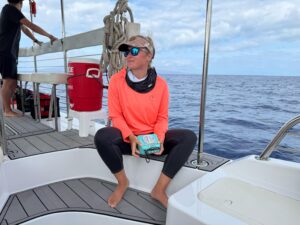
Here’s something many first-time whale watchers don’t know: you may have the opportunity to hear whales, not just see them.
A hydrophone is a specialized underwater microphone that allows us to listen to sounds beneath the surface.
Male humpback whales produce complex vocal sequences known as songs, particularly in breeding areas.
When conditions allow, our guide can lower a hydrophone into the water so guests can listen for these sounds.
There’s something extraordinary about hearing a whale vocalize somewhere beneath your boat.
You can’t see where the sound comes from, and you may not know how far away the animal is.
But suddenly, the ocean feels very different.
Of course, hearing whale songs isn’t guaranteed. It depends on whether whales are vocalizing, the surrounding noise, and underwater conditions.
Still, we think it’s a feature worth looking for when comparing tours.
Responsible Whale Watching: What Every Traveler Should Know
One of the biggest misconceptions about whale watching is that getting closer automatically means having a better experience.
It doesn’t.
Whales are wild animals, and responsible operators must give them space.
Mexico regulates whale watching through environmental rules, including NOM-131-SEMARNAT-2010, which establishes approach distances, vessel speeds, and other protections.
How to recognize a responsible operator
Before booking, look for a company that:
Operates with the required whale watching authorization.
Maintains appropriate distances from whales.
Never chases or blocks an animal’s path.
Gives mothers and calves extra space.
Avoids sudden acceleration and aggressive maneuvers.
Explains conservation practices to guests.
A whale approaching a boat on its own is very different from a captain pursuing one.
The goal should always be to observe natural behavior without interfering.
At AdaSailing, we want our guests to leave with a deeper appreciation for marine life, not just a collection of photographs.
How Much Do Whale Watching Tours Cost in Puerto Vallarta?
Prices vary depending on the boat, tour duration, group size, and what’s included.
A lower advertised price doesn’t always mean a better value.
Before comparing two tours, check whether you’re actually comparing similar experiences.
What should be included in the price?
Ask whether the tour includes a professional guide, life jackets, refreshments, snacks, port fees, and specialized equipment.
It’s also worth confirming whether the experience is shared or private.
For example, our shared whale watching experience aboard Bruna includes a certified bilingual guide, hydrophone, fruit, a panini, water, soft drinks, and the port fee.
Our tours are alcohol-free, allowing us to keep the focus on the ocean and the wildlife around us.
When you’re comparing prices, consider the complete experience rather than the ticket alone.
What to Bring on Your Whale Watching Tour

You don’t need much to enjoy a morning on the water, but a few essentials will make your experience more comfortable.
Here’s what we recommend:
Sunglasses and a hat: The reflection of sunlight on the ocean can be intense.
Reef-conscious sunscreen: Apply it before boarding whenever possible.
A light jacket: Mornings can feel cooler when the boat is moving.
A camera or smartphone: Keep it secured with a strap.
Comfortable clothing: Choose something suitable for sea spray and changing temperatures.
Motion sickness medication: If you’re prone to seasickness, consult a healthcare professional about taking it before departure.
One more tip: don’t spend the entire tour looking through your phone.
Take your pictures, of course. But give yourself a few moments to watch without a screen.
Those are often the moments you’ll remember most.
Is Whale Watching in Puerto Vallarta Worth It?
If you enjoy nature, spending time on the ocean, or discovering something new, we certainly think so.
But the best experiences aren’t necessarily the ones with the most dramatic photographs.
Sometimes, you’ll witness a spectacular breach.
Other times, you’ll observe a mother and calf moving slowly through the water, or hear a whale song through a hydrophone.
Every trip is different.
And that unpredictability is what makes whale watching so meaningful.
For families, it can become a wonderful opportunity to introduce children to marine conservation.
For couples, it’s a chance to share a peaceful morning away from the busy beaches.
And for travelers who simply love the ocean, it’s an opportunity to see Banderas Bay from an entirely different perspective.
Why We Love Sharing Whale Watching With Our Guests
At AdaSailing, the ocean is a big part of our everyday lives.
We spend so much time on the water that it’s easy to forget how extraordinary these encounters can feel to someone experiencing them for the first time.
Then we see a guest’s reaction when a whale surfaces.
Everything changes.
Conversations stop. Cameras come out. Someone points toward the horizon.
And for a few moments, everyone onboard is focused on the same thing.
That’s what we love about these experiences.
Aboard Bruna, we keep our whale watching groups small, with a maximum of 12 guests and a bilingual guide who shares insights about the whales and their environment.
Our four-hour experience gives us time to explore Banderas Bay without turning the morning into a race from one sighting to another.
We can’t control what the whales will do.
But we can make sure the experience is thoughtful, comfortable, and respectful.
Ready to Choose Your Whale Watching Experience?
Choosing the right tour comes down to more than price.
Look for a responsible operator, a knowledgeable guide, a boat that suits your comfort level, and a group size that matches the kind of experience you’re looking for.
Most importantly, choose a tour that treats the whales as wildlife, not entertainment.
If you’re visiting Puerto Vallarta during whale watching season, we’d love to welcome you aboard Bruna and share a little of what makes Banderas Bay so special.
Explore our whale watching experience at AdaSailing or contact our team to find the right date for your visit.
We’ll take care of the details. Nature will take care of the rest.